
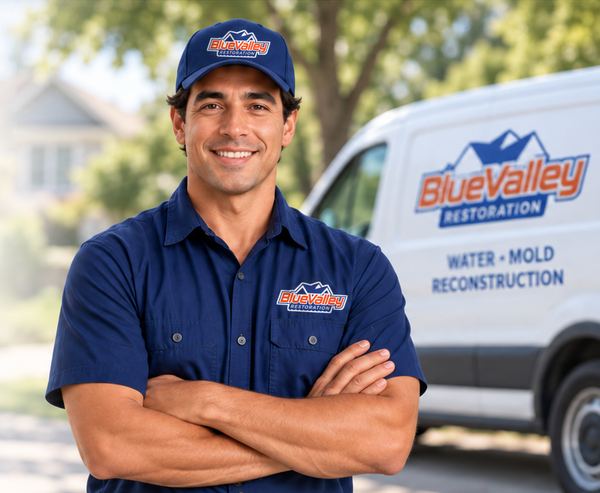
Blue Valley Restoration technician standing in front of a branded service van

Structural Drying and Dehumidification in Overland Park, KS

Structural drying is how wet framing, subfloors, drywall and wall cavities get back to normal moisture levels, verified with readings instead of a guess. It’s the part of water damage restoration that keeps problems from coming back. Serving Overland Park, Olathe, Leawood, Lenexa, Shawnee, Prairie Village, Mission Hills, Mission, Merriam and Lee’s Summit.

Blue Valley Restoration technician standing in front of a branded service van
  • Moisture meters, not guesswork
  • Air movers and dehumidifiers sized to the space
  • Readings tracked until materials are dry

Request a free evaluation

Describe what happened. We will call you back during business hours.

By submitting, you agree to our Privacy Policy.

We return calls during business hours, 7 AM–9 PM every day. For immediate help, call (913) 395-8488.

  • IICRC Certified & Fully Insured
  • Locally owned
  • Mitigation and help with repairs
  • Help documenting your insurance claim
  • Open 7 AM–9 PM, every day
Do this first

Before drying starts

Drying only works once the water is stopped and the bulk water is out.

  • Stay out of water near electricity.If water is near outlets, cords or anything plugged in, keep out. Don’t touch anything electrical or reach for the breaker panel through water. Call us, your electric utility or an electrician first.
  • Stop the source.Shut off the fixture or the main water valve.
  • Get standing water out.Extraction removes the bulk water so drying equipment can work on what’s left.
  • Take photos and video.Before anything is moved or thrown out. Your insurance company will ask for them.

Then call Blue Valley at (913) 395-8488. We will ask a few questions and tell you what happens next.

What structural drying involves

A few terms you may hear from us, explained.

Moisture mapping

Taking readings across floors and walls to find exactly where materials are wet.

Air movers

High-velocity fans that move air across wet surfaces so moisture evaporates.

Dehumidifiers

Machines that pull that moisture out of the air so it doesn’t settle back into materials.

Cavity drying

Small holes or removed baseboards that let air reach the inside of walls.

Flood cuts

Cutting drywall a few inches to a couple of feet up when a cavity won’t dry otherwise.

Dry standard

Normal moisture levels for that material, which is when we know it’s done.

What we do

How we dry a structure

Drying is a process we adjust every visit, not a set of fans left running.

  1. Map the moisture

    Readings across floors, walls and framing.

  2. Remove what won’t dry

    Soaked pad or drywall with wet insulation behind it.

  3. Place equipment

    Air movers and dehumidifiers set for the materials and space.

  4. Open cavities when needed

    Baseboards off or small holes so air reaches inside walls.

  5. Take readings and adjust

    Equipment is moved or reduced as areas dry.

  6. Confirm and document

    Final readings and photos for your records and your insurance company.

Dehumidifier display showing humidity readings during structural drying
Dehumidifier readings tracked during drying (Lee’s Summit, MO).
Dehumidifier and air movers drying a finished basement after a sump pump failure in Lee’s Summit, MO
Drying a finished basement (Lee’s Summit, MO).
Real jobs, real photos

Drying in practice

Real Blue Valley jobs. No customer names or addresses.

Floor-mat drying system with hoses and a dehumidifier drying cupped hardwood floors in an Overland Park, KS kitchen
Drying mats taped to wet hardwood flooring in Overland Park, KS
Dehumidifier display with temperature and humidity readings during hardwood drying in Overland Park, KS
Overland Park, KS · Hardwood floors

Cupped hardwood floors dried in place

What happened
Water got under the hardwood flooring in and around the kitchen.
What we found
The boards were wet and badly cupped, with the edges raised as the wood took on moisture.
What we did
We set up a floor-mat drying system, panels taped to the hardwood and connected by hoses that pull moisture out of the wood, with dehumidifiers running alongside.
Outcome
The floor was dried in place, and we tracked progress with moisture and dehumidifier readings throughout the job.

See more Overland Park projects →

Ceiling drywall cut out around a water stain below a failed upstairs supply line in Lee’s Summit, MO
Laundry room ceiling opened to dry after a supply line leak in Lee’s Summit, MO
Air movers and a dehumidifier drying a laundry room after a supply line leak in Lee’s Summit, MO
Lee’s Summit, MO · Supply line leak

Upstairs supply line leak into two ceilings

What happened
A supply line upstairs failed, and water came down into the bathroom and laundry room ceilings below.
What we found
Water stains and wet drywall in both ceilings, plus wet baseboards in the bathroom.
What we did
We cut out the wet ceiling drywall so the cavity could dry, pulled the affected baseboards and set up air movers and a dehumidifier in the laundry room.
Outcome
Drying was tracked with dehumidifier readings while the ceilings were open.

See more Lee’s Summit projects →

Insurance

Why drying records matter

Your adjuster may want to see how wet things were and how drying progressed.

  • Moisture readings at each visit.
  • Photos of equipment and affected areas.
  • Restoration estimates where appropriate.

Coverage depends on your policy and the cause, and your insurance company decides. We can’t promise what’s covered, but we make sure the damage is clearly documented.

Common questions

Straight answers. If your situation is different, call and describe it.

How long does structural drying take?

Usually several days once equipment is set up. Dense materials like hardwood and framing take longer than carpet or drywall. Readings decide when it’s done.

Why can’t I just use box fans?

Fans move air, but without dehumidification the moisture stays in the room and can settle back into materials. Fans also can’t tell you when the inside of a wall is dry.

Do the machines have to run all the time?

Yes. Turning them off slows drying. We know they’re loud and we’ll explain how long to expect.

How do you know it’s dry?

We compare readings on affected materials to normal readings for the same materials in an unaffected area.

When does mold become a risk?

The EPA recommends drying wet materials within 24–48 hours to help prevent mold growth. That’s why we start drying as soon as possible.

Cities we serve

Serving Overland Park, Olathe, Leawood, Lenexa, Shawnee, Prairie Village, Mission Hills, Mission, Merriam and Lee’s Summit. Pick your city for local details.

ShawneeMissionPrairie VillageLenexaLeawoodOlatheLee’s SummitOverland Park

Call our restoration team

Call about drying your home. We will explain what to expect and schedule a visit.

(913) 395-8488

Open 7 AM–9 PM, every day. Form requests receive a call back during those hours.

Our locations

  • Leawood
    15275 Metcalf Ave
    Overland Park, KS 66223
  • Olathe
    2012 E Prairie Cir, Unit C
    Olathe, KS 66062
  • Overland Park
    8400 W 127th St, Unit 12
    Overland Park, KS 66213

Request a free evaluation

Describe what happened. We will call you back during business hours.

By submitting, you agree to our Privacy Policy.

We return calls during business hours, 7 AM–9 PM every day. For immediate help, call (913) 395-8488.

Call (913) 395-8488 Free evaluation