
Frozen Pipes in Overland Park: How to Prevent Them Before the First Freeze
It's early October, and frozen pipes probably feel like a January problem. But the first freeze arrives sooner than most people expect. According to the National Weather Service's average first freeze dates, Olathe's average first fall freeze (32°F) is October 23, Lee's Summit's is October 17, and the long-term Kansas City average is October 28.
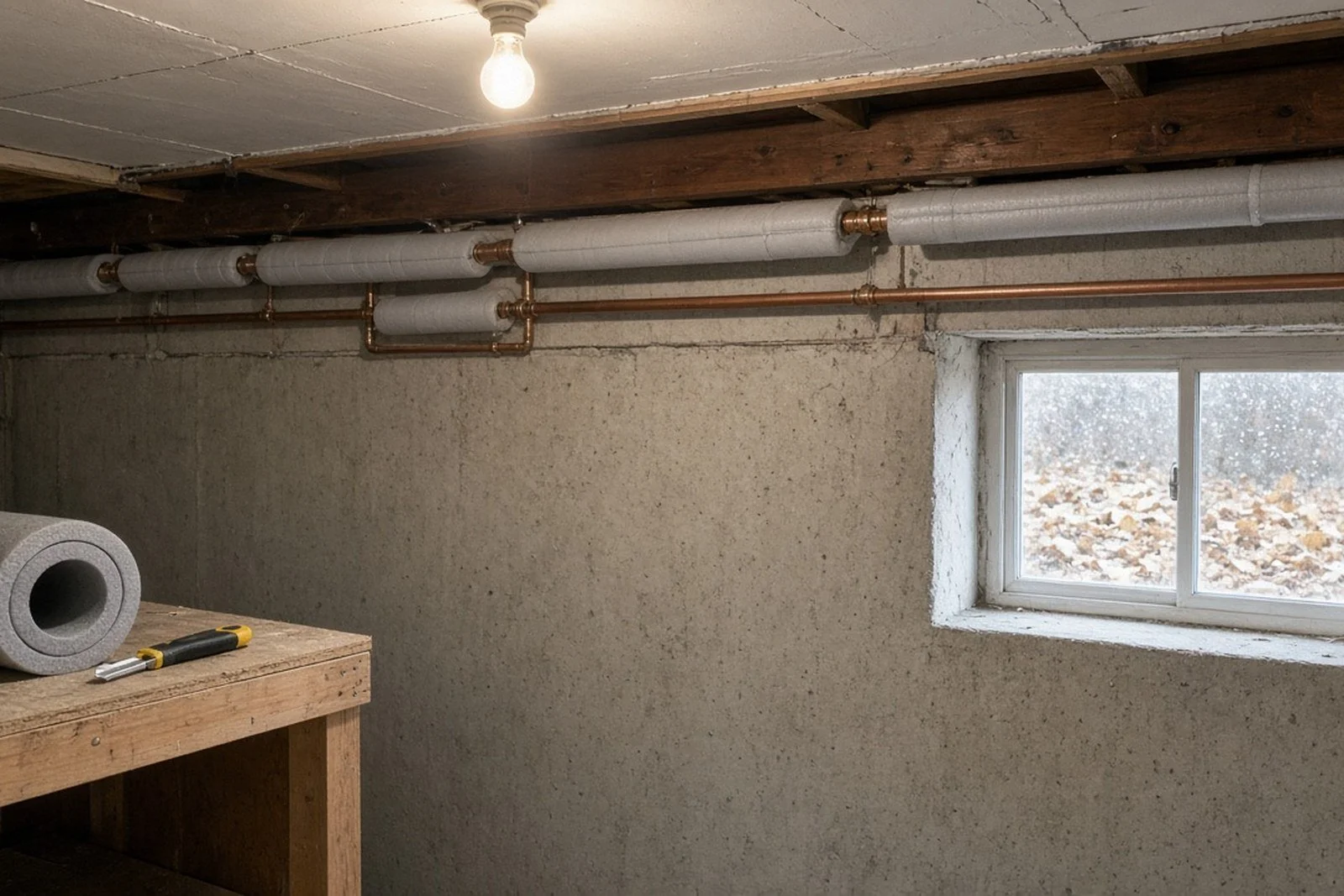
One cold night won't usually burst a well-protected pipe. The trouble is that the jobs that protect your plumbing, like shutting off outdoor faucets and insulating exposed lines, are easy to put off until the first hard cold snap. Here's what Johnson County homeowners can do this month, while it's still comfortable to work outside.
Why Pipes Freeze (and Where They Usually Do)
Water expands as it freezes. In a closed pipe, that pressure has nowhere to go, and a split can open in the pipe or a fitting. Often you won't know until the line thaws and water starts flowing.
Pipes in unheated or poorly insulated spaces are most at risk. In an Overland Park KCTV5 report, a local plumbing manager explained that frozen water lines generally happen on exterior walls. In Johnson County homes, that commonly means:
Outdoor hose bibs and the line running to them
Kitchen and bathroom sinks on exterior walls
Pipes in garages, crawl spaces, and unfinished basement rim joists
Bathrooms built over a garage or a cantilevered floor
Lines near drafty basement windows, dryer vents, or other gaps in the exterior
Your Pre-Freeze Checklist for October
1. Disconnect and drain garden hoses
A hose left attached can trap water in the faucet. In a January 2026 KCTV5 report from Olathe, a master plumber called a hose left on the spigot one of the most common mistakes she sees. Unhook hoses, drain them, and store them. If your outdoor faucets have an interior shutoff valve, close it and open the outside faucet to let the line drain.
2. Insulate exposed pipes
Foam pipe sleeves from the hardware store are inexpensive and easy to install on accessible pipes in basements, crawl spaces, and garages. Focus on lines that run along exterior walls or near the rim joist.
3. Seal the drafts
Cold air blowing directly on a pipe can freeze it even when the room feels fine. Caulk or foam gaps where pipes, cables, and vents pass through exterior walls. Check basement windows and replace worn weatherstripping.
4. Find your main water shutoff now
If a pipe bursts, every minute of flowing water adds to the damage. Locate your main shutoff (often in the basement near where the water line enters the house), make sure it turns, and show everyone in the household where it is. A tag on the valve helps.
5. Plan for heat tape where it's needed
For a problem pipe that has frozen before, heat cable rated for pipes can help. Follow the manufacturer's instructions carefully and plug it into a proper outlet.
Water in your home? Call Blue Valley today: (913) 395-8488
When Temperatures Drop: Keep Heat on the Pipes
Once nights dip below freezing, a few habits go a long way:
Keep the thermostat steady, including overnight and when you're traveling. Don't let the house get cold to save a few dollars.
Open sink cabinet doors on exterior walls so room heat reaches the pipes.
Let vulnerable faucets run a little. The Overland Park plumber in that KCTV5 story suggested more than a drip but less than a full stream on the coldest nights.
Warm up problem spots. If a bathroom sits over the garage, the plumber in the same report suggested running a space heater or opening the door between the house and garage to let warmth in.
What to Do If a Pipe Freezes
If you turn on a faucet and get only a trickle, or nothing at all, a pipe may be frozen.
Leave the faucet open so water can flow once it thaws.
Apply gentle heat to the pipe, such as a hair dryer or space heater kept a safe distance away. Never use an open flame.
Don't automatically shut off the whole house. The Olathe master plumber in KCTV5's report advised against shutting off water to the entire home for a frozen pipe. If you can't find the frozen section or can't reach it safely, call a plumber.
Watch closely as it thaws. If you see water spraying, dripping, or spreading, close the main shutoff right away.
If a Pipe Bursts
Shut off the main water valve first. If water is near outlets, cords, or the electrical panel, stay out of the area until power is off. Then take photos and video before you clean up; your insurance company will want them.
Water from a burst line spreads fast into carpet pad, drywall, and subfloors. Professional water extraction, structural drying, and dehumidification find and remove moisture you can't see. Learn more about our burst pipe water damage service, or call for emergency water damage restoration.
Blue Valley Water Damage Restoration is a full-service company that has partnered with Flood Rewind, so the same team can carry your home from drying through water damage repair and reconstruction. We serve Overland Park, Olathe, Shawnee, and the rest of Johnson County, plus Lee's Summit, MO.
If you're dealing with a different kind of water problem this fall, our guide to water in the basement after heavy rain walks through the first steps.
Frequently Asked Questions
When is the first freeze in Overland Park?
It varies every year. The National Weather Service lists Olathe's average first fall freeze as October 23. Lee's Summit's average is October 17, so it's smart to finish winterizing by mid-October.
Should I shut off my water if a pipe freezes?
Not necessarily. A local master plumber told KCTV5 that shutting off water to the whole home for a frozen pipe can do more harm than good. Shut off the main if the pipe bursts or starts leaking.
Does insulating pipes really help?
Yes, especially for pipes along exterior walls, in garages, and in crawl spaces. Insulation slows heat loss. It's most effective when you also seal the drafts blowing on those pipes.
What should I do if a pipe bursts while I'm away?
Have a neighbor or family member who knows where your main shutoff is. Once the water is off, call a restoration company quickly so drying can start.
Burst Pipe? We're Here to Help
If a frozen pipe has already split, don't wait for it to dry on its own. Call Blue Valley Water Damage Restoration at (913) 395-8488.
Water in your home? Call Blue Valley today: (913) 395-8488