Water Heater Leak Cleanup in Johnson County, KS
A 40- or 50-gallon tank sitting in your basement or utility closet is a lot of water waiting for a weak spot. When a water heater leaks or the tank fails completely, that water spreads under walls, into carpet, and across finished floors fast. Blue Valley Water Damage Restoration responds 24/7 to clean up water heater leaks, dry the structure, and repair the damage. Call (913) 395-8488
Leaking water heater? Do this first
- Turn off the power or gas. For an electric heater, switch off its breaker. For a gas heater, turn the control knob to "off" or "pilot."
- Shut off the cold water supply. The valve is usually on the cold line coming into the top of the tank.
- Keep your distance from hot water. Water near the tank can be scalding.
- Move belongings away from the water and take photos.
- Call a plumber to repair or replace the heater, and call us to remove the water and dry the area.
Where water heaters leak
Where the water is coming from tells you a lot about how serious it is:
- Leaking from the bottom of the tank. Usually means the tank itself has corroded through. This won't fix itself, and a full tank failure can follow.
- Leaking from the drain valve. Often a loose or worn valve, which may be a simple repair.
- Leaking from the top. Usually a loose inlet or outlet connection or a failing supply line.
- Leaking from the pressure relief valve or the pipe on the side. The relief valve may be doing its job because pressure or temperature is too high, or the valve itself has failed. Either way, a plumber should check it.
- Water around the base but the tank looks dry. Condensation, a leaking supply line, or another source nearby, like a water softener or furnace drain.
Most tank water heaters last around 8 to 12 years. If yours is in that range and showing rust at the bottom, plan for replacement before it fails.
Why water heater leaks cause so much damage
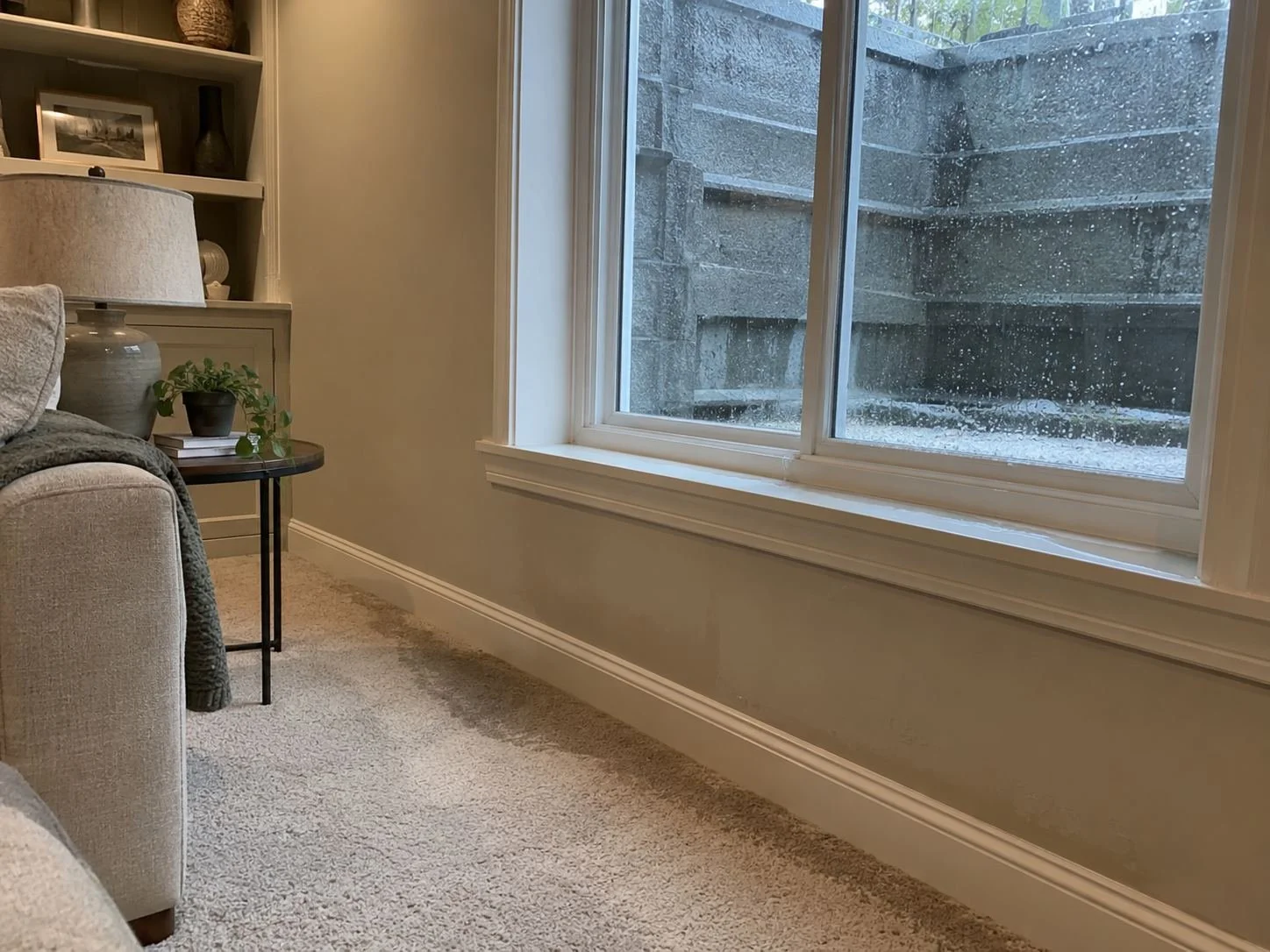
In many Johnson County homes, the water heater sits in an unfinished utility room right next to a finished basement. A slow leak can soak the bottom of the drywall and the carpet pad on the other side of the wall for weeks before anyone notices. A sudden tank failure can release the full tank, and the cold water line keeps refilling it until someone shuts it off.
In homes with water heaters in a closet on the main floor or in an attic, the water heads straight down into ceilings below.
Our water heater leak cleanup process
- Source secured. We confirm the water and power or gas to the heater are off.
- Water extraction. We remove standing water from floors, carpet, and pad.
- Find hidden moisture. Moisture meters and thermal imaging show where water traveled under walls and flooring.
- Remove damaged materials. Wet pad, the lower section of affected drywall, and swollen baseboards and door casing are removed when they can't be dried.
- Structural drying and dehumidification. We dry the framing, subfloor, and concrete to a measured dry standard.
- Repair and rebuild. Our water damage reconstruction work restores drywall, flooring, trim, and paint once everything is dry.
If the leak flooded more than the utility room, our flooded basement cleanup page covers what a full basement dry-out looks like.
Help with your insurance claim
Homeowners policies generally cover sudden water damage from a water heater that bursts or fails. The heater itself, and damage from a slow leak that went on over time, are often treated differently. We document the failed unit, how far the water spread, and the moisture readings, and we can meet your adjuster on site. We'll explain what we see, but your insurer makes the coverage decision.
Water heater leak cleanup near you
We clean up water heater leaks in Lenexa, Overland Park, Merriam, Mission, and Lee's Summit, MO, along with the rest of Johnson County.
Water heater leak FAQ
Is a leaking water heater dangerous?
It can be. Hot water can scald, water near electrical connections is a shock risk, and a gas heater that's been soaked should be checked before it's relit. Turn off power or gas and keep your distance until it's safe.
Can a leaking water heater be fixed?
Leaks from loose connections or a worn drain valve can often be repaired. A leak from the tank itself usually means the heater needs to be replaced. A plumber can tell you which it is.
How much water can a water heater leak?
A full tank failure releases the whole tank, usually 40 to 50 gallons, and the cold water supply keeps refilling it until the valve is closed. That's why shutting off the supply quickly matters.
I didn't notice the leak for a while. Can you still help?
Yes. We'll measure how far the moisture spread, dry what can be saved, and replace what can't. Long-term leaks are more likely to need drywall and flooring replacement, and we'll document the damage either way.
Water around your water heater?
Shut off the supply and call Blue Valley Water Damage Restoration. We're available 24/7 for water heater leak cleanup and drying. Call (913) 395-8488