Burst Pipe Water Damage Cleanup in Johnson County, KS
A burst pipe can put hundreds of gallons of water into your home before you even know it happened. Whether a line froze during a cold snap, a fitting finally gave out, or a supply line split under a sink, Blue Valley Water Damage Restoration responds 24/7 to remove the water, dry out walls and floors, and repair the damage. Call (913) 395-8488
First: shut off the water
If a pipe has burst, the most important thing is stopping the flow.
- Close the main water shutoff. In most Johnson County homes, it's in the basement or utility room near where the water line comes through the foundation wall, often close to the water meter or water heater.
- Open a faucet on the lowest level to drain pressure from the lines.
- Shut off power to areas where water is near outlets or fixtures, if you can do it safely.
- Call a plumber to repair the pipe itself, and call us to deal with the water.
We aren't plumbers, but we work alongside them all the time. We can recommend one if you need it, and our crew can start extraction while the pipe is being fixed.
Why pipes burst in Johnson County
Frozen pipes. Kansas winters bring stretches of single-digit temperatures. Pipes in exterior walls, unheated garages, crawlspaces, attics, and above-garage bedrooms are the most likely to freeze. Ice expands inside the pipe, and the burst often isn't noticed until the pipe thaws and water starts flowing, sometimes hours later.
Outdoor spigots. A garden hose left connected in the fall can trap water in a frost-free spigot. When it freezes, the pipe can split inside the wall, and the first sign is water in the basement ceiling or along the foundation.
Aging plumbing. Older homes may still have galvanized steel or early copper that corrodes from the inside. Pinhole leaks and failed joints are common.
Supply lines and fittings. Braided supply lines to toilets, sinks, and ice makers, along with push-fit connectors and PEX crimp rings, can fail without warning.
Water pressure. High household water pressure stresses pipes and fittings over time.
Our burst pipe cleanup process
- Rapid response. We answer around the clock and help you get the water shut off.
- Trace the water. Water from a burst pipe travels inside walls, under flooring, and down through ceilings. We use moisture meters and thermal imaging to find all of it, not just the puddle you can see.
- Water extraction. We remove standing water from floors, carpet, and pad.
- Open what has to be opened. Wet ceiling drywall and insulation are usually removed so the cavity can dry. Walls may need small access holes or a flood cut.
- Structural drying and dehumidification. Air movers and dehumidifiers run until readings confirm the framing, subfloor, and remaining materials are dry.
- Repairs. Once the structure is dry, we handle water damage repair and reconstruction, from a ceiling patch to a full room.
Where burst pipe water goes
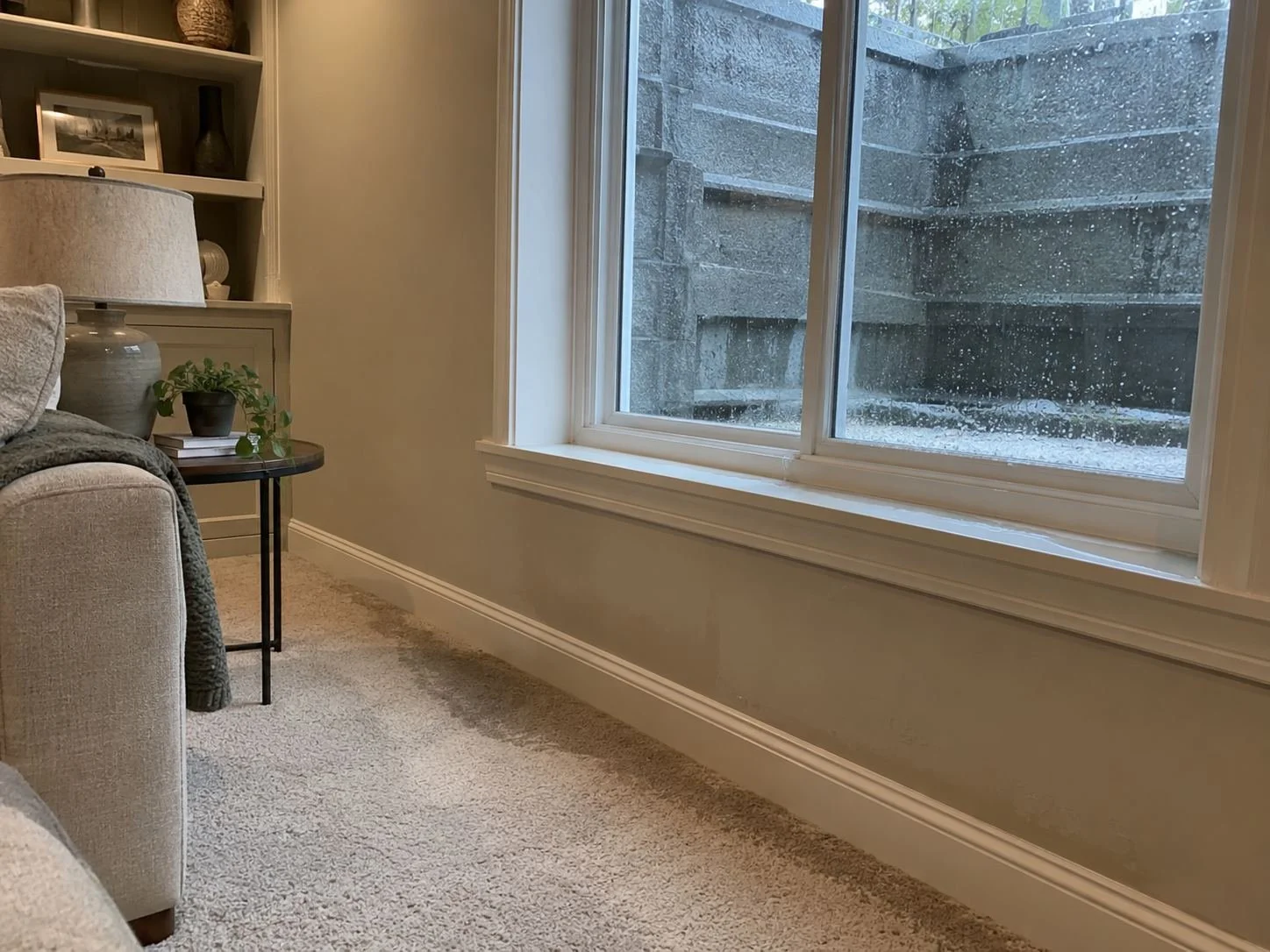
A pipe that bursts upstairs rarely stays upstairs. Water runs along joists and comes through light fixtures and seams in the ceiling below. A pipe in an exterior basement wall can soak carpet across an entire finished basement. Because the damage is often bigger than it looks, we document every affected area so nothing is missed in the repair or the insurance claim.
Preventing frozen pipes next winter
- Disconnect garden hoses before the first hard freeze
- Insulate pipes in exterior walls, garages, and crawlspaces
- Keep the heat at 55°F or higher when you travel
- Open cabinet doors under sinks on exterior walls during cold snaps
- Let a faucet drip on the coldest nights
- Know where your main shutoff is before you need it
Help with your insurance claim
Most homeowners policies cover sudden and accidental water damage from a burst pipe, including frozen pipes, as long as reasonable steps were taken to keep the home heated. Repairing the pipe itself may be handled differently than repairing the water damage. We document the failed pipe, the moisture readings, and every affected area, and we can meet your adjuster on site. We'll explain what we see, but your insurer makes the coverage decision.
Burst pipe cleanup near you
We respond to burst pipes across Overland Park, Leawood, Lenexa, Mission Hills, and Lee's Summit, MO, plus the rest of Johnson County.
Burst pipe FAQ
How do I know if a pipe burst inside a wall?
Look for water stains on walls or ceilings, bubbling paint, a sudden drop in water pressure, the sound of running water when everything is off, or a water meter that keeps moving. Our thermal imaging can find wet areas inside walls without tearing them open.
My pipe froze but hasn't burst yet. What should I do?
Shut off the water to that line or the main, open the faucet, and warm the area slowly with a space heater or hair dryer. Never use an open flame. If the pipe cracked, water will start flowing as it thaws, so keep the water off until you know it held.
Do you fix the broken pipe?
We focus on water removal, drying, and repairs to your home. A licensed plumber should repair the pipe itself. We can recommend one and coordinate so drying starts as soon as possible.
How long does it take to dry after a burst pipe?
Most homes take three to five days of drying, depending on how much water was released and how many materials it reached. Ceilings, hardwood, and wall cavities can take longer.
Water pouring from a broken pipe?
Shut off the main and call Blue Valley Water Damage Restoration right away. We're available 24/7 for burst pipe cleanup across Johnson County. Call (913) 395-8488