
Sump Pump Failed? What Olathe and Overland Park Homeowners Should Do in the First Hour
It's usually quiet when it happens. The rain keeps coming, the pump that normally kicks on every few minutes doesn't, and the first sign is a wet sock at the bottom of the stairs or a water alarm going off near the pit.
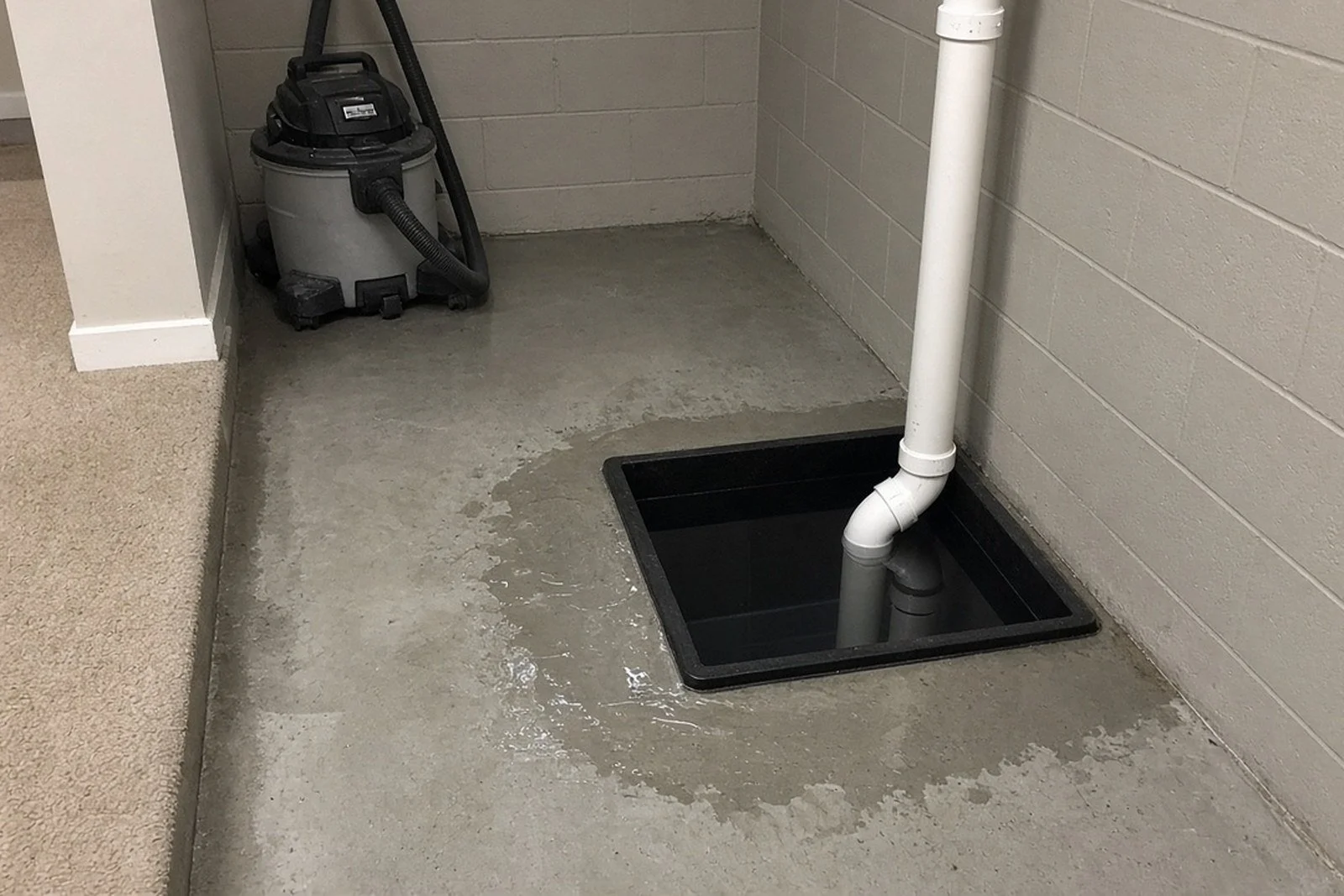
In an August 2026 KSHB 41 report on hidden storm damage, the station noted that a failed sump pump is one of the most common causes of basement flooding. Many homes in Olathe and Overland Park, especially newer ones with finished lower levels, depend on a sump pump every time the ground gets saturated.
Here's what to do in the first hour, in order.
Minutes 0–5: Stay Safe
Water and electricity are the first concern. A sump pump plugs into an outlet down near the floor, and basements often hold the furnace, water heater, and electrical panel.
Don't step into standing water if it may be touching outlets, extension cords, power strips, or appliances.
If you can reach the breaker panel from a dry spot, turn off power to the basement. If you can't do that safely, stay upstairs and call an electrician or a restoration pro.
Move kids and pets upstairs, and watch for slippery stairs and floors.
Minutes 5–15: Figure Out Why the Pump Stopped
Many failures have simple causes. Once the area is safe, check these, but only touch the pump or its cord when the power is off:
Power. Is the pump still plugged in? Did a breaker trip or a GFCI outlet pop? Is there a neighborhood power outage?
The float switch. The float tells the pump when to turn on. If it's stuck against the side of the pit or tangled in the cord, the pump won't run even though it has power.
The discharge line. If the pipe carrying water out of the house is clogged or disconnected, the pump may run without moving water.
The pump itself. If it hums but doesn't pump, or doesn't make any sound with power and a free float, the motor may have failed.
If you have a battery backup pump, check whether it's running and how charged the battery is. If the power is out and you have a generator, follow the manufacturer's safety instructions; never run one indoors or in an attached garage.
Minutes 15–30: Slow the Water Down
If you can't get the pump running, you can still limit the damage:
Use a wet/dry vac or a spare utility pump to pull water from the pit and the floor.
Cut down on water going into the pit. Hold off on laundry, dishwashers, and long showers if your washer or other drains empty into the pit.
Check outside. Point downspouts away from the house and clear leaves from window well drains so less water reaches the foundation.
Water in your home? Call Blue Valley today: (913) 395-8488
Minutes 30–45: Document Everything
Before moving or throwing anything out, take photos and video:
Wide shots of every wet room
Close-ups of the water line on walls, wet carpet, baseboards, and furniture
The sump pit, the pump, the float, and the discharge line
Any breaker or outlet that tripped
Write down when you noticed the water and what you checked. Keep receipts for anything you buy or rent. Good records help your insurance company understand what happened.
Minutes 45–60: Protect Your Belongings and Make the Calls
Move boxes, rugs, electronics, and furniture off wet floors. Put aluminum foil or blocks under furniture legs you can't move.
Call your insurance agent or company. Sump pump overflow is often excluded from standard homeowners policies unless you've added a specific endorsement, so ask what your policy covers.
Call a plumber if the pump needs repair or replacement.
Call a water damage restoration company if water has reached carpet, pad, drywall, or anything you can't easily dry.
Why Fast Drying Matters
Shop vacs and box fans help, but water wicks up into drywall, under baseboards, and into carpet pad where you can't see it. That hidden moisture is what leads to musty smells, warped trim, and mold.
Professional water extraction removes the bulk water quickly. Structural drying and commercial dehumidification then bring materials back to normal moisture levels, verified with meters, not just "dry to the touch." Our sump pump failure cleanup and flooded basement cleanup services cover the whole process. If water is spreading, call for emergency water damage restoration.
Blue Valley Water Damage Restoration is a full-service company that has partnered with Flood Rewind, so one call handles everything from water removal through water damage repair. We serve homeowners in Olathe, Overland Park, Lenexa, and across Johnson County.
How to Lower the Odds of It Happening Again
Test the pump before storm season by slowly pouring a bucket of water into the pit and watching it turn on and shut off.
Add a battery backup so the system keeps working during an outage. KSHB's report recommended checking for one before the next storm.
Install a water alarm or moisture sensor near the pit. Some send an alert straight to your phone.
Know your pump's age. A KCTV5 report on sump pumps put the average lifespan at eight to ten years.
For more on rain-related basement water, see our guide to water in the basement after heavy rain.
Frequently Asked Questions
Why did my sump pump stop working during a storm?
Common causes include a power outage, a tripped breaker or GFCI outlet, a stuck float switch, a clogged discharge line, or a worn-out motor. Check with the power off.
Can I just vacuum up the water myself?
For a small amount of water on bare concrete, often yes. If water has soaked carpet, pad, or drywall, professional extraction and drying can reach moisture a shop vac can't.
Does homeowners insurance cover sump pump failure?
It depends on your policy, and your insurer decides. Sump pump overflow is often excluded unless you've added a specific endorsement. Call your agent to ask.
How long does a sump pump last?
A KCTV5 report put the average lifespan at eight to ten years. Test yours before storm season and consider a battery backup.
Sump Pump Failed? We're Here to Help
If water is spreading across your basement, don't wait. Call Blue Valley Water Damage Restoration at (913) 395-8488.
Water in your home? Call Blue Valley today: (913) 395-8488